Wednesday, June 15, 2011

Gemstone Series - Agate Geode

About Agate Geode
Agate is a form of chalcedony quartz that forms in concentric layers in a remarkable variety of colors and textures. Agate was highly valued as a talisman or amulet in ancient times. Geodes are rock cavities or vugs with internal crystal formations or concentric banding. Cut in slices, agate geodes are popular with collectors and jewelry designers.

Agate is found in many locations in the world, including Brazil, Uruguay, Australia, India, China, Madagascar, Mexico, Mongolia, Namibia and the USA.


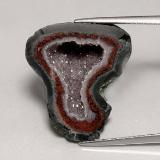
17.96ct Agate Geode
Agate Geode from The SourceAgate Geode from The SourceAgate Geode from The Source


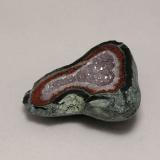
16.82ct Agate Geode
click here to see the next gemstone


Monday, June 13, 2011

YAY June!


MEET OUR
PIXIELICIOUS
MAYOR 
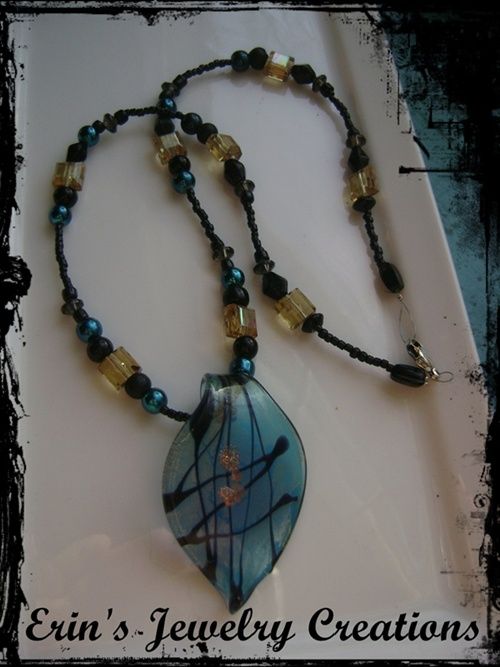
ERIN'S JEWELRY CREATIONS
armybanner


Please introduce yourself to our visitors..
I am a self-taught jewelry designer and a very crafty person, from jewelry to bath and body products to candy and chocolates. Jewelry is way more than a hobby to me... its my business, my life ( besides family, friends, my cat, oh and my boyfriend ).

Why did you start an online business?

I wanted to share my creations with more people.


How long have you been selling online?


I have been selling on Etsy ( my first shop) since 07. Artfire since 2009.

What samples will you be including in the Sampler Village sample boxes for the month you are Mayor?


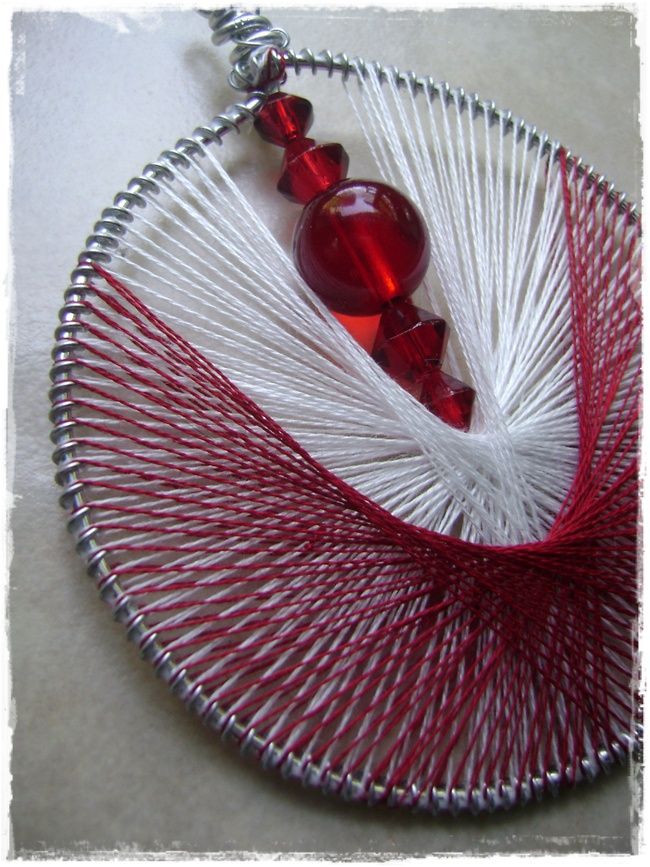
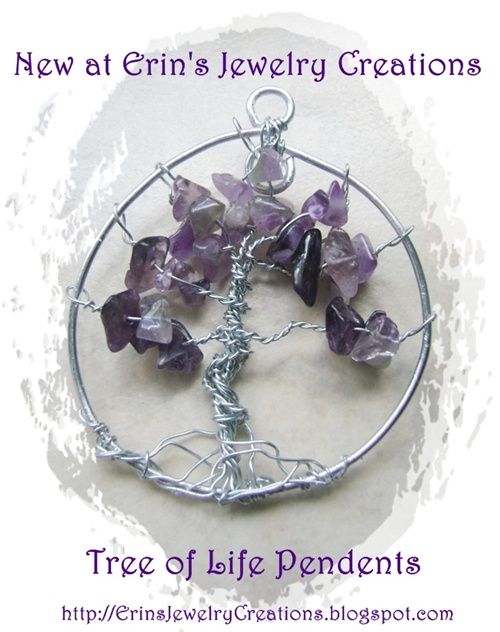
I will be sending in a new creation.. Peruvian String Art pendents.  


What is your personal favorite product/item that you make? 
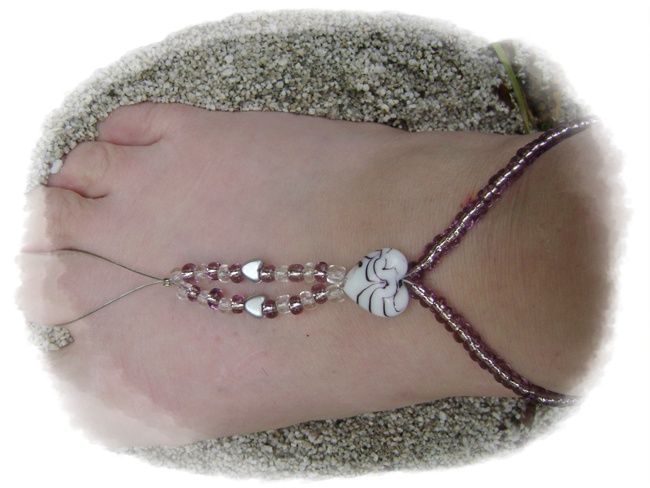
Well I love making the string art jewelry but my favorite thing to make are barefoot sandals.


Give us your thoughts on Sampler Village and being Mayor for a Month..


I love the Sampler Village. This is almost a year in the making. Ive been getting more and more excited about June:)

Please list other websites that you would like others to visit you at..


MANY THANKS TO ERIN FOR BEING OUR PIXIELICIOUS MAYOR!


********** 

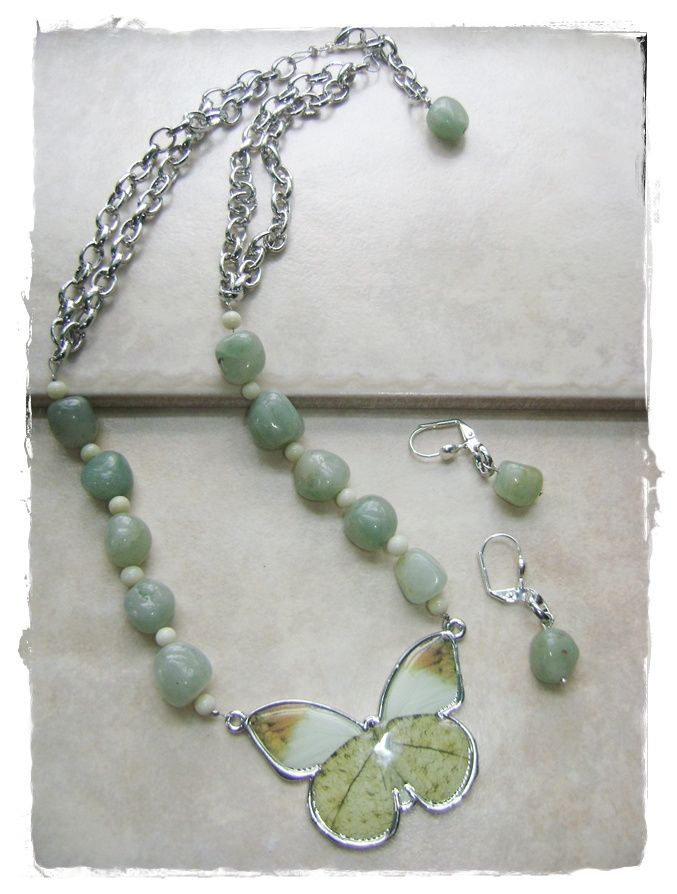
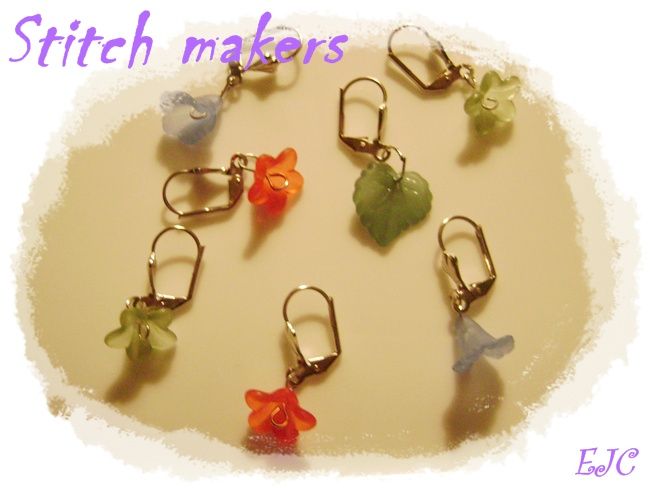
This is what I sent in ...

Boxes go on sale 
JUNE 21 :)


Thursday, June 2, 2011

Agate Stone

Quartz is one of the most common minerals on earth, but the quartz family is actually made up of two separate branches. When most people think of quartz, they think of what is known as macrocrystalline quartz, which includes rock crystal, amethyst, citrine, smoky quartz and rose quartz. Macrocrystalline quartz, as the name suggests, has large crystals which can be distinguished by the naked eye. This type of quartz is mainly transparent to translucent, with a vitreous luster.

Banded Agate from India

The other type of quartz is known as cryptocrystalline quartz. It has microscopically (or submicroscopically) small crystals and is usually translucent to opaque, with a waxy to greasy or dull luster. This kind of quartz has fibrous and granular subcategories. The fibrous varieties are known under the name chalcedony, but this name covers a remarkable variety of stones.
Dendritic Agate from India


In practice, the name chalcedony refers to solid colored cryptocrystalline quartz, especially of a light color. The patterned varieties tend to have their own names. The most famous of these include agate, distinguished by its bands of colors; onyx, black and white layered (usually dyed to produce a uniform black); carnelian, a yellow-orange to reddish-orange, colored by iron; and chrysocolla, a rare vivid blue-green colored by copper.

The patterns of agate are so distinctive that a number of different varieties are commonly identified in the trade. They include eye agate, which forms ring shapes with a point in the center; dendritic agate, distinguished by its moss-like patterns; and fire agate, with an unusual iridescence.

Agate was used as a gemstone by the Egyptians at least 3,000 years ago. In modern times, agate has a special association with the Idar-Oberstein region in Germany. Idar-Oberstein was an important source of agate until the 19th century, and the region was favored with good local sandstone for producing cutting and polishing wheels, and water power to work the wheels.
Fire Agate from Mexico


Fortunately for Idar-Oberstein, large deposits of agate were discovered in Brazil in the 1830's, just as the agate mines in Germany were starting to be worked out. The agate polishing industry in Germany flourished as a result and produced high quality object d'arts, beads, rings, pendants, brooches and cameos.

Today agate continues to be mined in Brazil, but also in Uruguay, India, Australia, China, Madagascar, Mexico, Mongolia and Namibia.


click here to go to the next gemstone 

Wednesday, June 1, 2011

June Birthstone : Pearl

From one of the humblest of life forms, the mollusk, comes the pearl -- a gem of unsurpassed beauty and elegance. Ancient civilizations had many stories to explain the origin of June's birthstone, such as the Greek belief that pearls were the hardened tears of joy that the goddess of love shook from her eyes as she was born from the sea. According to Arab legend, pearls were formed when oysters were lured from the depths of the ocean by the beautiful moon and then swallowed moonlit dewdrops. And the Ancient Chinese thought that these gems originated from the brains of dragons.

The scientific explanation for natural pearls is almost as mystifying as folklore. When an irritant, such as a small parasite or a fish lodges in the flesh of an oyster, mussel, or clam, a protective substance called "nacre" is produced. Over years, layer upon layer of shimmering nacre coats the intruder, creating a lustrous pearl. Natural pearls are relatively rare, so a process evolved in which a piece of shell or bead was placed inside a mollusk to stimulate the production of nacre. This results in a cultured pearl, which accounts for about 90 per cent of the pearl industry.

Divers find natural pearls in The Persian Gulf as well as in the waters off Japan, the South Pacific Islands off northern Australia, and the coasts of Panama, Venezuela, and California. Most of the cultured pearl industry is in Japanese and Australian coastal waters. These gems come in a variety of colors, from pure white to pink, yellow, gray and black. They also come in different shapes and sizes.

Pearls have been a passion and even an obsession of people throughout the ages. They have been ground up and used in cosmetics and as a medicine to treat heart and stomach conditions. Some cultures swear by pearls as an aphrodisiac. These gems have adorned crowns, clothing, and temples, and were said to be a favorite of Cleopatra.

Only those with royal status once wore pearl jewelry, but eventually these gems were seen among all classes of people. They continue to be viewed as a mark of taste and refinement as well as a symbol of purity, and they are often given to celebrate a marriage or the birth of a child. Pearls are nature's perfect gift, suitable for all ages, and elegantly worn with everything from jeans to an evening gown.

Alternate Birthstones
June has two alternate birthstones. The first is Moonstone, a type of feldspar named because of its uncanny resemblance to the iridescent sheen of the moon. Varying in color from clear to blue-white or peach, it was considered by ancient civilizations to be a sacred stone, bestowing the wearer with great spiritual understanding. Some believed that the Moonstone could even make a person invisible! Mined in Sri Lanka, Brazil, India, Madagascar, and the United States, a gift of this stone is symbolic of health and longevity.

The second alternate birthstone for June is the Alexandrite. A yellowish or brownish green in color, this gemstone has the unique characteristic of changing color to a red hue when exposed to a glowing light source, such as candlelight. Because of this quality, it has been characterized by poets as "an emerald by day, a ruby by night." Alexandrite was first discovered in Urals in 1830 but is mined today primarily in Sri Lanka, Zimbabwe, Brazil, Burma, Madagascar and Tanzania. It is a rare and expensive gemstone, symbolic of joy and good fortune.
Related Posts Plugin for WordPress, Blogger...